
Blog
Fear of Birds: Understanding and Overcoming Ornithophobia
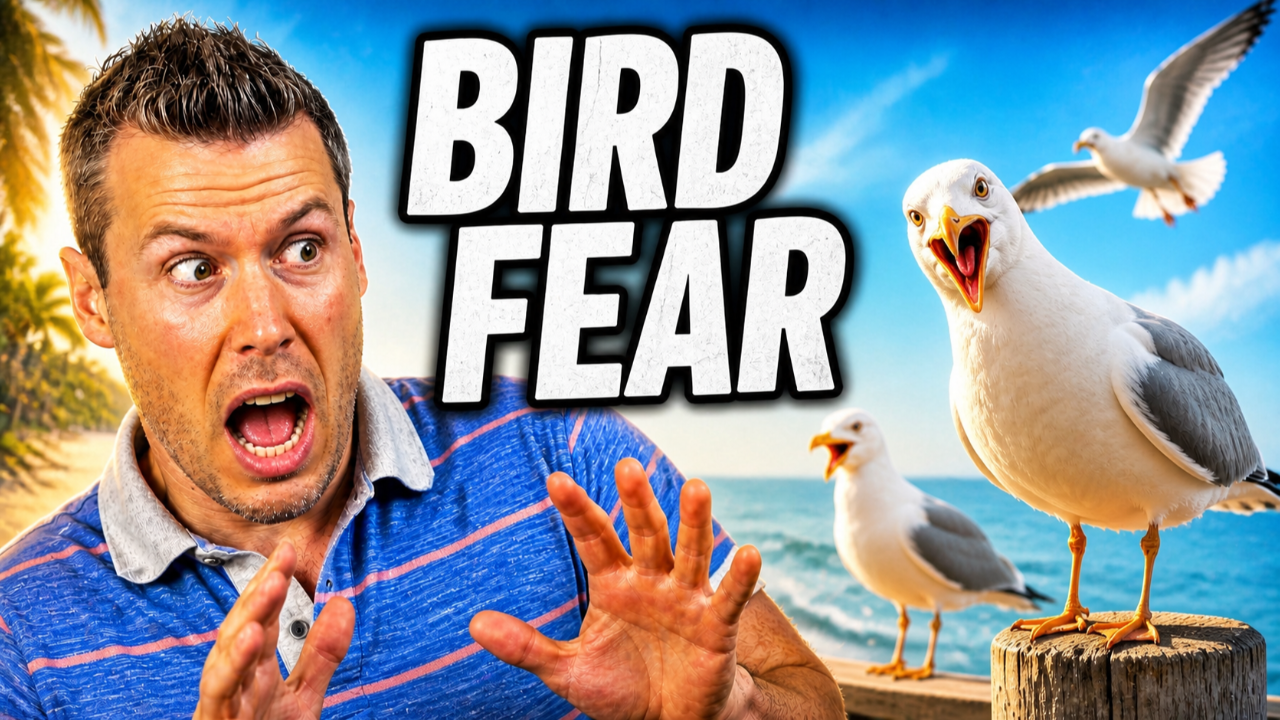
If you have a fear of birds, this article is for you - not the general unease most people feel when a seagull gets too close at the beach, but a genuine, persistent fear that is affecting where you go, what you do, and how you live your day-to-day life.
This is called ornithophobia, and it is more common, more treatable, and more understandable than most people realise.
Over the last 12 years I have helped many people work through fears just like this. Below I will explain what causes it, how it works in the brain, and most importantly, the step-by-step process that actually fixes it.
Watch: Fear of Birds Explained
What is ornithophobia?
Ornithophobia is the clinical name for an intense, persistent fear of birds. The word comes from the Greek "ornithos" (bird) and "phobos" (fear).
To be classified as a phobia rather than general discomfort, the fear needs to be:
- Out of proportion to the actual threat
- Present for at least six months
- Causing you to change your behaviour ...
Social Anxiety Virtual Exposure Therapy: Full Guide
If you have social anxiety, there is a good chance you have already tried things that did not work. Breathing exercises. Positive reframing. Avoiding the situations that trigger you the most. And each time, you probably walked away feeling like the problem was you - that you were just too anxious, too far gone, too wired this way to change.
You are not the problem. The treatment was just never set up properly.
This page is a complete virtual exposure programme for social anxiety, built across eight video sessions. It is structured, graded, and based on the same clinical approach I use in my practice. You can use it on its own or alongside work with a therapist.
Before you start, read through this page. Understanding how and why exposure works - and what makes it fail - is the difference between real progress and just sitting through uncomfortable content for nothing.
What Is Virtual Exposure Therapy for Social Anxiety?
Virtual exposure therapy uses carefully chosen stimuli - words...
Why the Fear of Judgement Is Never About Other People
If you've ever been told to just stop caring what other people think, you'll know how spectacularly useless that advice is.
It's not that you haven't tried. It's not that you needed someone to remind you that other people's opinions don't matter. You know that. You've told yourself a thousand times. And nothing has changed.
The reason that advice keeps failing isn't a problem with you. It's that it's solving the wrong problem entirely.
What Social Anxiety Is Really About
Here's the part that surprises most people: social anxiety isn't fundamentally about other people at all.
What I see underneath it, consistently, across hundreds of clients over twelve years of practice, is negative core beliefs about self. These are deep, often long-held ideas about who you are and what you're worth. The four I encounter most often are:
- I'm unworthy
- I'm not good enough
- I'm unloveable
- I'm unlikeable
These beliefs don't tend to show up as conscious thoughts you can argue with. They sit ...
Public Speaking Anxiety: Why Most Advice Makes It Worse
Picture this. You've got a presentation coming up. Already, you can feel the dread settling in - the rehearsals in your head, the worst-case scenarios, the decision to prepare just a little more. Just in case.
The day comes. And despite everything you did to get ready, you're still shaky, still convinced everyone can see it.
If that sounds familiar, you're not alone. Research puts public speaking anxiety at around 25% of the population - and that's probably conservative.
Here's what I want to offer you today: the problem isn't that you're not prepared enough. The problem is that most of the advice out there is actively keeping the anxiety going.
Why Public Speaking Feels Like a Threat
Your brain has a threat detection system - centred around a structure called the amygdala - that's been running for hundreds of thousands of years. Its job is to spot danger and prepare you to deal with it.
Back when your ancestors lived in small tribes, being rejected from the group could literal...
Why the Things You Do to Cope With Social Anxiety Are Making It Worse
Picture this. You've got a work event coming up - a team lunch, a party, something like that. And you're not dreading the event itself. You're dreading what might happen to you at the event.
So the worrying starts. What should I wear? Who's going to be there? What are we even going to talk about? You start mentally rehearsing conversations - working out exactly what you'll say if someone asks what you've been up to, or how you'll handle the small talk near the food table.
You arrive. You keep your voice low, just quiet enough that if you say something awkward, maybe no one will quite catch it. When someone asks you a question, you answer quickly - get it out, get it over with, move the attention somewhere else. You ask them about themselves. Pivot back to them. Keep the spotlight well away from you. And any time you're about to speak, you do a quick mental check first - is this okay to say? Does this sound normal? - before the words come out.
You get through the evening. Nothing ter...
Introvert or Social Anxiety? Here's How to Tell the Difference
You cancel the plans. Reading a book or playing some video games sounds much better. And honestly? You feel relief.
If you identify as an introvert, that probably makes total sense. Of course you feel better alone - you're just wired that way.
But what if some of that relief isn't about being introverted at all? What if some of it is your nervous system coming down from a false alarm?
There's an overlap between introversion and social anxiety that doesn't get talked about enough. And understanding where one ends and the other begins could genuinely change things for you.
I say this as an introvert myself - this distinction matters.
What Introversion Actually Is
Let's start with the science, because it's actually fascinating.
Researchers have mapped the brains of introverts and extroverts and found genuine, measurable differences. Introverts have higher levels of electrical activity in their brains - both at rest and during tasks. Our brains are processing more information, mo...
Blushing, Sweating and Shaking from Anxiety: Why It Happens and How to Stop It
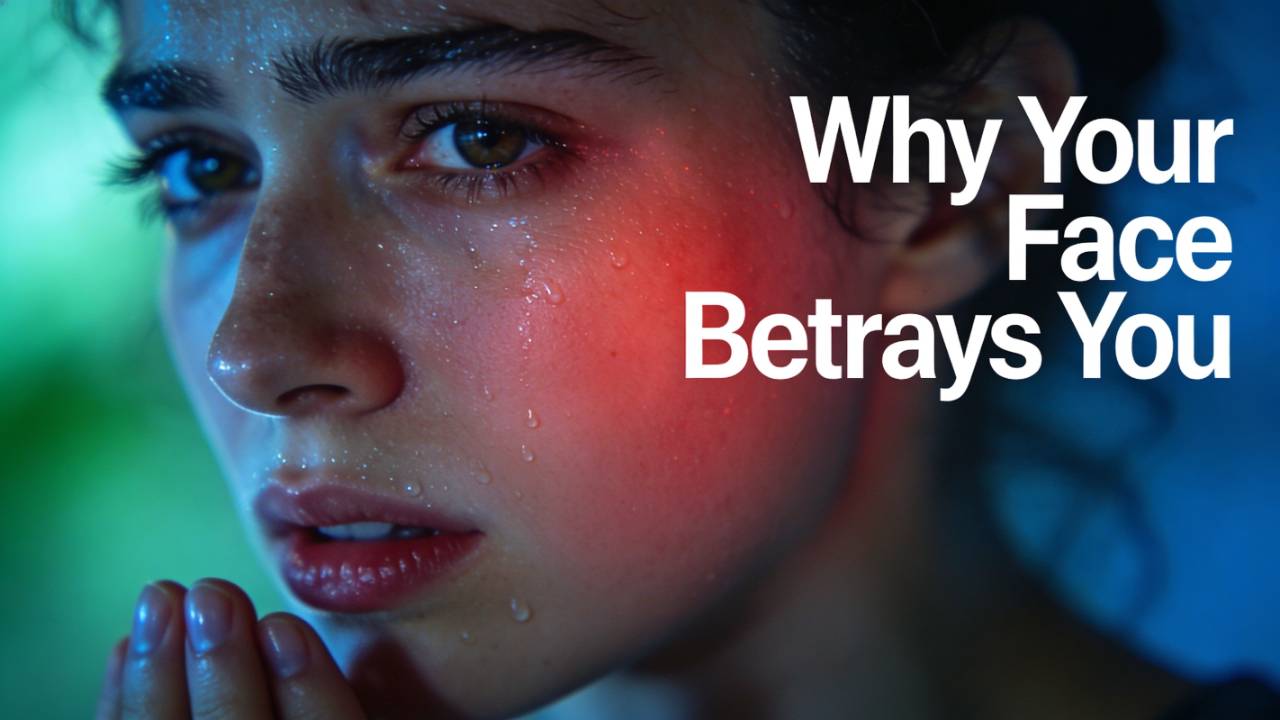
You're sitting across from someone. Could be a first date, a job interview, your boss, someone you find attractive. The conversation is going fine - and then you feel it. A warmth creeping up your neck. Your face starts to heat up. And then you know it's happening. You're going red.
And the second you know you're going red, it gets worse.
Your heart picks up. Maybe your hands start to tremble just slightly. And now you're sweating too, because of course you are. And all of this feels completely visible to the other person.
If this sounds familiar, you're not broken, you're not weird - and this is actually one of the most understandable things your body can do. Let me explain what's going on, and more importantly, what actually helps.
What's Actually Causing Blushing, Sweating and Shaking
Here's something that might surprise you: blushing, sweating and shaking in social situations are all caused by the exact same thing. Adrenaline.
When your brain detects a threat, it fires off...
The 5-Second Rule for Social Anxiety
Picture this.
You're at a work function. There are people everywhere, conversations buzzing all around you. Across the room, there's someone you actually want to talk to - a colleague you've never properly met, maybe someone interesting, maybe just literally anyone so you don't have to stand there pretending to check your phone.
And you think: I'll go over in a sec.
And then a second passes. And another. And five. And twenty.
By the time you've thought about it long enough, your brain has run the full catastrophe - what if they don't like me, what if I say something weird, what if I can't keep the conversation going - and now you're not going anywhere.
If that sounds familiar, you're really not alone. Social anxiety affects around 12% of people at some point in their lives. That frozen moment - that window where you could have moved but didn't - is something I hear about from clients regularly.
Today I want to walk through why that window exists, what slams it shut, and what actu...
Alcohol and Social Anxiety: How Drinking Makes Anxiety Worse Long-Term
You're at a party and your heart is racing. Your palms are sweaty, your mind goes blank, and you're already planning your escape route. So you grab a drink to take the edge off.
It works... for that night.
But here's what most people don't realize: that beer you just drank to calm your nerves is actually making your social anxiety worse in the long run.
If you've experienced this, you're not alone. Studies show that people with social anxiety are two to three times more likely to use alcohol as a coping mechanism. After 12 years of treating anxiety and analyzing the research, I've discovered three things most people believe about drinking for social confidence that are completely wrong.
Why Alcohol Seems to Help Social Anxiety (But Doesn't)
When you drink alcohol, it affects your brain's GABA system. GABA is like your brain's brake pedal – it slows things down and reduces activity in the parts of your brain responsible for worry and fear, particularly your amygdala.
Within ab...
Is It Shyness or Social Anxiety? The Difference That Changes Everything
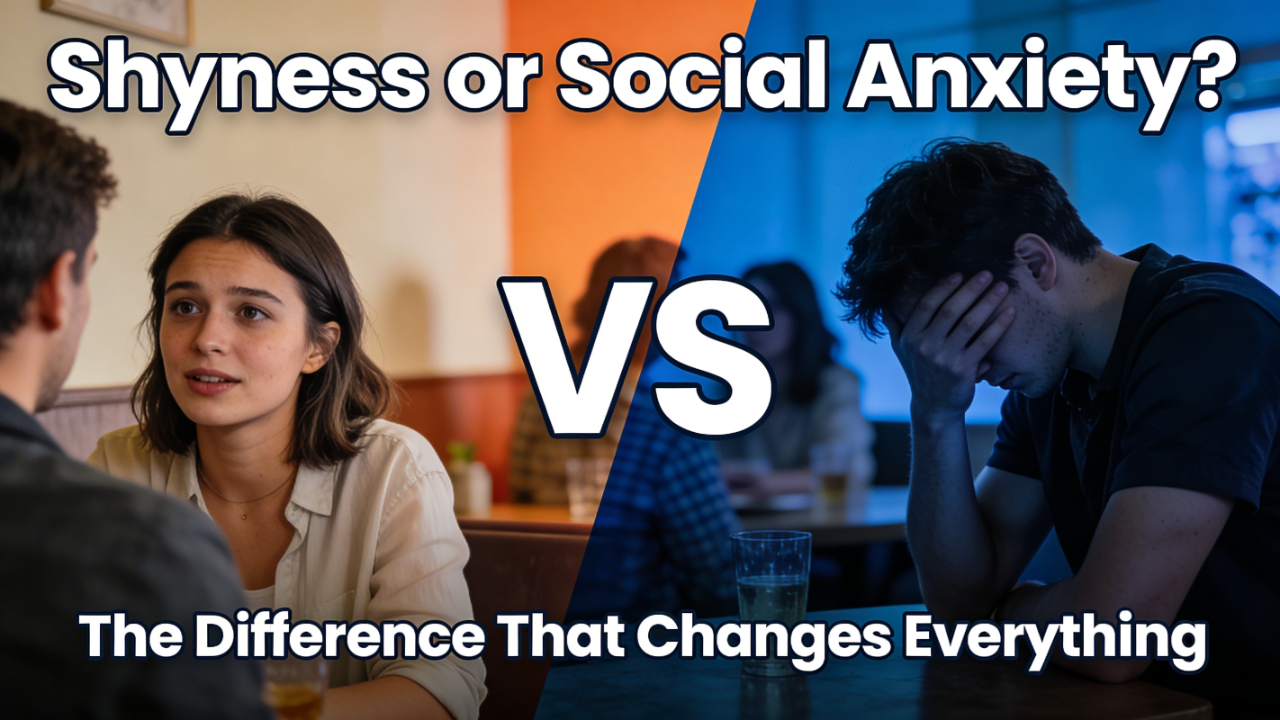
You're standing at a party, palms sweaty, heart racing, convinced everyone's judging you. Sound familiar?
Here's the million-dollar question: Is that just shyness, or is it social anxiety?
Understanding the difference isn't just semantic - it could literally change your life. If you've ever wondered whether what you're experiencing is normal discomfort or something more, this article will help you figure it out.
What Is Shyness?
Let's start with shyness, because it's incredibly common. We're talking about 40-50% of people identifying as shy at some point in their lives.
Shyness is fundamentally about temperament and personality. Shy people tend to:
- Feel uncomfortable in new social situations
- Be quiet and reserved
- Prefer smaller groups over large gatherings
- Take time to warm up to new people
But here's the critical distinction: shyness doesn't stop you from living your life.
A shy person might feel nervous before a work presentation, but they still do it. They might no...

